Midwest banking trends are shifting as rural communities look for financial services that combine trusted relationships with practical digital tools. Across southwest Indiana, customers are balancing everyday banking needs with longer-term goals, including building savings, supporting local businesses, and preparing for future generations.
Springs Valley Bank & Trust continues to serve individuals, families, farmers, and business owners with financial solutions designed around the communities it serves. As customer expectations change, the bank continues to provide personal guidance alongside digital tools that help customers manage everyday financial tasks.
Community banking continues to adapt. Customers want convenient ways to review accounts, monitor activity, and manage finances, but they also value access to local professionals who understand their goals and circumstances.
This Q3 2026 report explores several areas influencing rural banking, including community-centered checking and savings, agri-business lending, digital financial planning, small business support, and account security.
The goal is to provide a closer look at the financial tools and services that may support customers through different stages of life.
What This Blog Covers
This report covers:
- Community-centered checking and savings in the rural Midwest.
- Agri-business lending and local economy support.
- Digital tools for long-term wealth planning.
- Small business and sustainable lending innovation.
- Digital security in the age of AI and automation.
- How local banking continues to support future financial goals.
Community-Centered Checking & Savings in the Rural Midwest
Checking and savings accounts remain central to everyday money management. While technology has changed how customers access accounts, many people continue to value reliability, accessibility, and support from their financial institution.
In rural communities, banking relationships often develop over many years. A customer may begin with a first checking account and later return to the same institution for savings, borrowing, business needs, or retirement planning.
Q3 can be a valuable time for customers to review their banking habits, evaluate savings progress, and consider whether their current accounts continue to support their financial goals before year-end.
Community-centered checking focuses on helping customers manage daily financial needs while maintaining access to local guidance when questions arise.
Today’s customers expect flexibility. They want convenient ways to review transactions, monitor savings goals, and manage accounts while still having access to knowledgeable banking professionals when making important financial decisions.
Evolving Customer Priorities in Rural Markets
Customers in rural communities often look for banking relationships built on trust, accessibility, and personal service. While digital banking has changed how people manage accounts, many customers still value having a local team available when they need guidance.
Research from the Federal Deposit Insurance Corporation (FDIC) shows that consumers use a combination of traditional banking relationships and digital tools. Convenience, trust, and access remain important factors when households choose financial institutions.
As customers review their finances throughout the year, priorities in rural markets continue to expand beyond basic account access. Many customers want services that are easy to understand and resources that help them make informed decisions.
Financial needs can also change as customers reach major milestones, such as purchasing a first home or moving into a new stage of homeownership. Customers exploring borrowing options can learn more about available solutions through home loan and mortgage services.
Community banks can support these needs by combining financial products with conversations focused on individual circumstances. This relationship-based approach helps customers understand available options and make informed decisions.
Financial education is also an important part of the customer experience. Clear information about saving, budgeting, account security, and planning can help customers feel more confident managing their finances.
The Shift Toward Eco-Conscious and Community-Rooted Banking Products
Many consumers are paying closer attention to how financial decisions connect with their values. They may consider community impact, responsible business practices, and long-term financial planning when selecting financial providers.
Community-rooted banking keeps financial decisions connected to local needs. Deposits support lending activity, and lending decisions help individuals, families, and businesses pursue their goals within the communities a bank serves.
Springs Valley Bank & Trust provides customers with banking options designed around everyday financial needs, including checking accounts, savings accounts, and digital banking services.
Customers can learn more about available options through Springs Valley’s personal checking accounts and personal savings accounts.
For many customers, choosing a financial institution involves more than comparing account features. It also involves considering the level of service, accessibility of support, and strength of the relationship.
Consumer expectations continue to influence banking, including demand for convenient digital experiences, transparency, and access to knowledgeable support.
Digital Features With Local Trust: Why Rural Customers Want Both
Digital banking has become part of everyday financial management. Customers use online and mobile tools to review balances, monitor transactions, manage transfers, and stay informed about account activity.
Digital features with local trust reflect what many rural customers want: convenient tools combined with access to people who understand their financial needs.
Customers may also use digital tools to research borrowing options and prepare for conversations about personal financing needs. Springs Valley provides resources through consumer loan services to help customers explore available lending solutions.
Springs Valley’s digital banking services are designed to provide convenient account access while maintaining the support customers expect from a community bank.
Customers may use digital tools for everyday account management while connecting with banking professionals for more complex financial decisions.
Convenience and trust work together. Customers want tools that simplify banking while maintaining access to guidance when financial questions arise.
Building Financial Skills for Youth and Families
Financial habits often begin early. Families who introduce children to saving, budgeting, and responsible spending can help build a foundation for future financial confidence.
Youth savings accounts and family financial-education activities can give children and teenagers opportunities to practice setting goals, reviewing balances, and making responsible spending decisions.
Everyday experiences, such as saving for a purchase or tracking progress toward a goal, can help children understand how financial decisions today can influence future outcomes.
Summer Savings Challenges for Kids
Savings challenges can make financial education more engaging for children.
Summer savings challenges for kids may encourage young savers to:
These activities help children understand that consistent habits can make larger goals more achievable.
Early financial lessons can become the foundation for stronger money management skills later in life.
Savings With a Purpose
Saving money is often connected to a specific goal, whether preparing for planned expenses, building an emergency reserve, or working toward future priorities.
A clear savings strategy can help customers organize their goals and understand how their money supports future plans.
Visual Savings Dashboards
Visual savings tools can help customers better understand their progress.
Visual savings worksheets, budgeting applications, or other tools may help consumers connect saving activity with specific objectives. Customers should review the features, fees, privacy practices, and security terms of any tool they choose to use.
Seeing progress over time can make saving feel more manageable and help customers stay focused on their priorities.
Rainy Day Backup Accounts & Emergency Planning
Unexpected expenses can affect any household. Building emergency savings may provide additional flexibility when financial challenges arise.
The Consumer Financial Protection Bureau (CFPB®) has emphasized the importance of emergency savings as part of household financial resilience. Even small, consistent contributions may help households prepare for unexpected costs.
Rainy day backup accounts and emergency planning can help customers create a strategy for managing unplanned expenses while continuing to work toward other financial goals.
Customers should consider their income, expenses, priorities, and individual circumstances when determining how to organize their savings.
Agri-Business Lending and Local Economy Support
Agriculture continues to play an important role in rural communities throughout the Midwest. Farmers, producers, and agricultural businesses often need financial solutions that understand seasonal cycles, operational demands, and changing market conditions.
Agri-business lending provides financing options designed to support approved agricultural needs while helping customers manage the unique challenges that come with farming and production.
Agriculture contributes to more than individual operations. Farms and agricultural businesses support suppliers, equipment providers, service companies, and families throughout rural communities. This connection makes agricultural lending an important part of local economy support.
A strong agricultural banking relationship requires more than access to financing. Producers often need a financial partner who understands that decisions about equipment, operating expenses, land, and growth are connected to long-term goals.
Springs Valley Bank & Trust works with agricultural customers by providing relationship-based lending support and financial solutions designed around rural business needs.
Financing the Heartland’s Growth in Q3
Agricultural operations often face unique challenges in Q3, including equipment decisions, seasonal expenses, changing market conditions, and preparation for upcoming financial needs.
For many producers, the third quarter is an important planning period. Farmers may be evaluating operating expenses, preparing for harvest-related activity, reviewing equipment needs, and considering how current conditions may affect year-end planning.
Financial institutions that understand local agriculture can provide guidance that reflects the realities of rural businesses and the timing challenges producers face throughout the year.
Springs Valley Bank & Trust works with agricultural customers to provide lending solutions and relationship-based support designed around the needs of local producers.
Farming requires careful planning because many financial decisions happen before revenue is received. Producers may need to manage expenses, prepare for seasonal changes, and consider investments that support future operations.
The financial needs of an agricultural business can vary depending on the type of operation, size of the business, and long-term goals. A family farm preparing for expansion may have different priorities than a producer focused on maintaining current operations or preparing for future seasons.
Local lending relationships can help customers discuss these differences and review options based on their individual circumstances.
Agricultural customers often benefit from working with lenders who understand that timing matters. Seasonal expenses, weather conditions, input costs, and market changes can all influence financial decisions throughout the year.
A relationship-based approach allows producers to have ongoing conversations rather than only seeking support when a financial need becomes urgent. By reviewing needs throughout the year, farmers can better prepare for upcoming decisions and adjust plans as conditions change.
Drought Risks, Equipment Upgrades, and Seasonal Cash Flow Needs
Q3 can be a critical planning period for agricultural operations as producers evaluate weather conditions, prepare for harvest, and review financial needs before year-end.
Weather conditions can have a significant impact on agricultural planning. Drought, changing growing conditions, and increased operating costs may affect production expectations and influence how farmers approach budgeting, financing, and cash flow management.
During Q3, producers may also review equipment needs before the next season. Maintenance, repairs, and equipment upgrades can become important considerations as farmers evaluate how to maintain productivity and manage operational demands.
Farmers should work with their financial advisors and lending teams to review options based on their individual circumstances.
Agricultural operations often require flexibility because conditions can change throughout the year. Weather patterns, input costs, commodity markets, and seasonal expenses can all influence financial decisions during the third quarter.
When reviewing equipment needs, producers may consider:
- How the equipment supports current and future operations.
- Whether upgrades align with long-term business goals.
- How financing fits within seasonal cash flow planning.
- The expected impact on productivity and operational efficiency.
Careful planning can help farmers evaluate equipment decisions within the broader context of their business strategy.
Seasonal cash flow is another important consideration during Q3. Many agricultural operations experience periods where expenses occur before income is received, creating a need for thoughtful planning around operating costs and upcoming obligations.
By reviewing cash flow needs throughout the year, producers can better prepare for seasonal expenses, adjust plans as conditions change, and make informed decisions about financing and future investments.
The Continued Importance of Flexible Ag Lending in 2026
Flexible ag lending may help agricultural customers address changing needs throughout the year.
Local lending relationships allow customers to discuss goals, review financing needs, and understand available options.
Agriculture continues to evolve as producers adapt to changing conditions, technology, and operational demands. Financial solutions that recognize these differences can help customers evaluate decisions within the context of their overall business plans.
Flexible ag lending in 2026 remains important because no two agricultural operations are exactly alike. Farmers may have different goals depending on their products, land, equipment needs, and future plans.
A local lender can provide an opportunity for ongoing conversations about these factors.
Springs Valley’s Agriculture Lending Options
Agricultural customers often need financial solutions that reflect the realities of farming and rural business ownership.
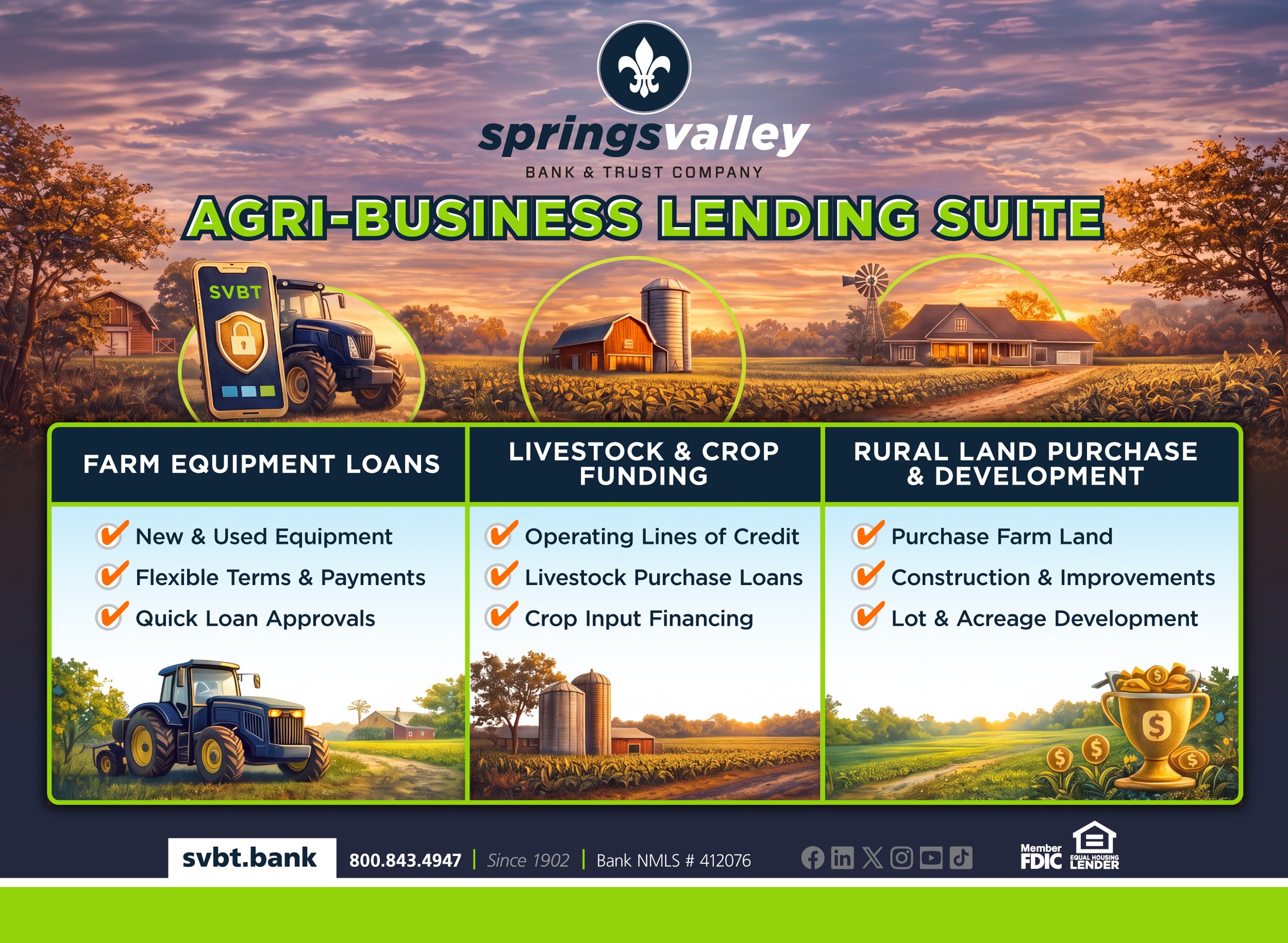
Springs Valley Bank & Trust Company offers agricultural lending options that may include financing for equipment, operating needs, livestock, crops, land purchases, and other approved business purposes.
Agricultural credit is subject to application, underwriting, credit approval, collateral requirements, and applicable terms and conditions. Product availability and structure may vary.
Farm Equipment Loans
Equipment plays a significant role in many agricultural operations. From planting and harvesting to daily maintenance, reliable equipment helps farmers manage essential responsibilities and maintain productivity.
Q3 can be an important time for producers to evaluate equipment needs before the next operating cycle. Farmers may review current machinery, consider repairs or upgrades, and determine whether new equipment may better support future goals.
Farm equipment loans may help eligible customers finance approved equipment purchases based on their individual needs and qualifications.
Before making an equipment decision, farmers should consider how the purchase fits within their broader operational plans, seasonal cash flow, and long-term financial goals.
Planning equipment purchases ahead of peak operational periods may help producers better understand their options and prepare for future business needs.
Livestock & Crop Funding Options
Livestock and crop operations often require careful planning because expenses and income may occur at different times throughout the production cycle.
Q3 can be an important period for producers to review operating needs, evaluate production conditions, and prepare for upcoming expenses before year-end. Factors such as feed costs, input expenses, market conditions, and seasonal timing may influence financial decisions.
Livestock & crop funding options may help eligible agricultural customers address approved financing needs related to their operations.
Each operation has different considerations, including production cycles, expenses, and long-term goals. Customers should discuss their circumstances with a qualified lending professional to understand available options and determine what may align with their plans.
Rural Land Purchase & Development Loans
Land decisions can represent a significant step for agricultural businesses. Whether expanding operations, purchasing property, or making approved improvements, rural land decisions require careful financial planning.
Q3 may be a valuable time for producers to evaluate future growth plans, review land needs, and consider how potential investments fit within their broader agricultural strategy.
Rural land purchase & development loans may provide financing options for eligible customers based on their goals and financial circumstances.
Customers should evaluate land decisions alongside their broader business strategy, including operational needs, future plans, seasonal cash flow considerations, and long-term financial goals.
Planning ahead can help agricultural customers make informed decisions about expansion and future opportunities.
Partnership with Local Producers
Agricultural communities are built on relationships. Farmers and producers often value working with financial professionals who understand the importance of local agriculture and rural businesses.
A partnership approach allows customers to discuss current needs while also planning for future opportunities.
Springs Valley Bank & Trust focuses on relationship-based service to help agricultural customers navigate financial decisions.
Business Relationship Managers in Farming Communities
Agricultural customers may benefit from working with banking professionals who understand local business conditions and the seasonal nature of farming operations.
Business relationship managers can provide a consistent point of contact for discussions about financing needs, operational goals, and financial questions throughout the year.
During Q3, these conversations may help producers review upcoming expenses, evaluate changing conditions, and consider how current decisions fit within their broader business plans.
A strong lending relationship allows customers to better understand available options and make informed decisions based on their individual circumstances.
Quarterly Lending Check-Ins
Regular communication can help agricultural customers stay connected with their financial partners as conditions change.
Q3 check-ins can provide an opportunity to review current needs, discuss upcoming expenses, and evaluate financial plans before year-end planning begins.
Agricultural planning is ongoing. Weather conditions, market changes, operating costs, and business goals can all influence decisions throughout the year.
Maintaining open communication can help producers stay prepared and better understand available financing options.
All loans are subject to credit approval. Terms and conditions apply. Financing availability, loan structure, and rates may vary based on creditworthiness, business financial condition, collateral, and other underwriting factors.
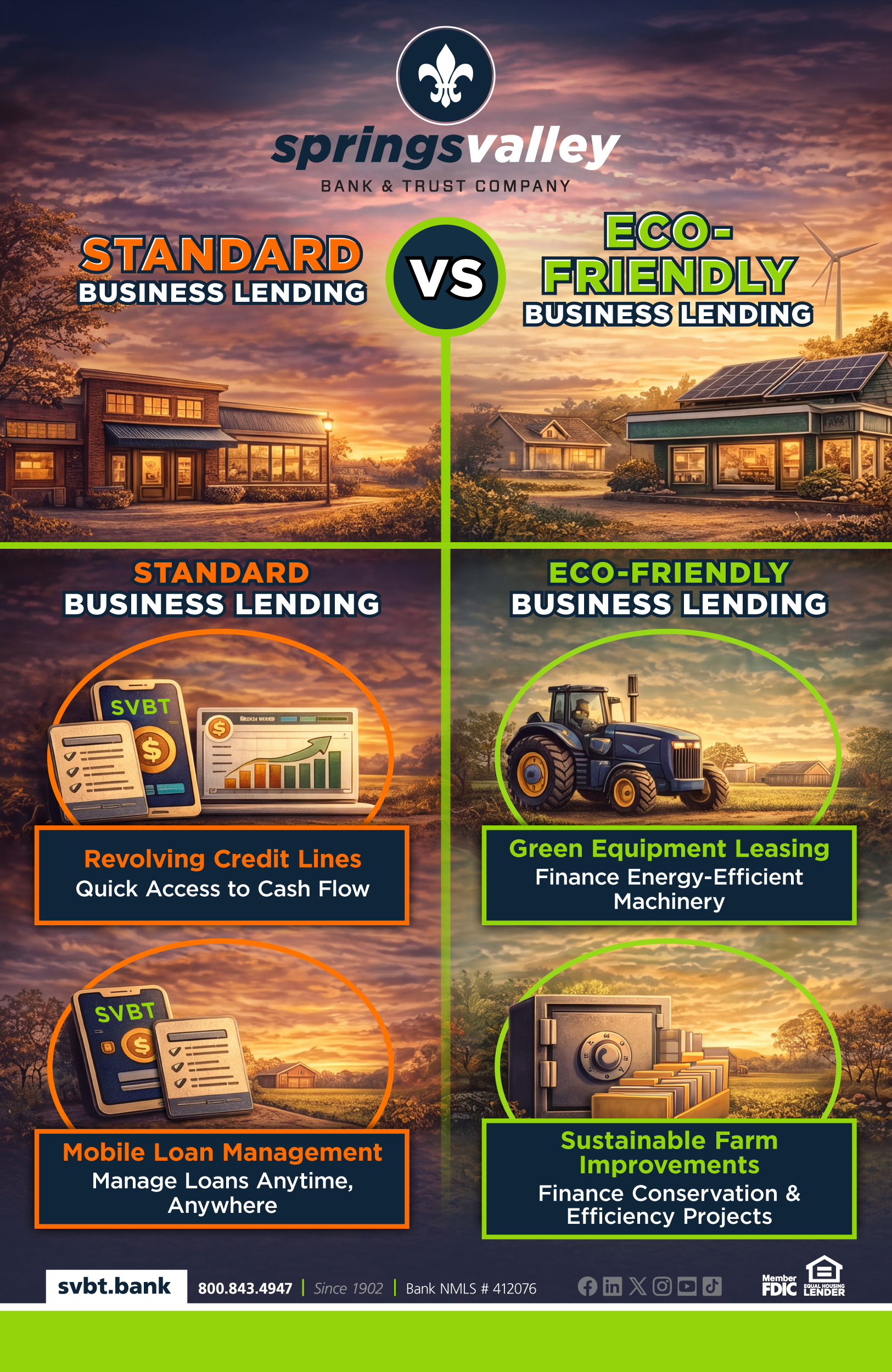
Green Equipment Leasing Options
Equipment decisions can be an important part of business planning. Whether replacing outdated equipment, improving efficiency, or preparing for growth, business owners often need to evaluate how investments fit within their overall strategy.
General equipment-leasing options may help eligible businesses finance equipment purchases, including equipment selected to support operational-efficiency goals. Springs Valley does not independently certify equipment as environmentally beneficial or guarantee cost savings, emissions reductions, tax treatment, or environmental performance.
Before making a financing decision, business owners should consider factors such as:
- The purpose of the equipment.
- The expected impact on operations.
- The financial needs of the business.
- Long-term business goals.
A thoughtful approach can help business owners make decisions that support continued operations while considering future needs.
Working with a financial professional can help business owners better understand available options and determine what approach may be appropriate for their circumstances.
Digital Carbon Tracking Dashboards
Technology continues to influence how businesses measure operations, evaluate efficiency, and plan for future goals.
Q3 can be a valuable time for businesses to review operational data, identify potential improvements, and prepare for year-end planning. Digital carbon tracking dashboards may help businesses organize information related to sustainability efforts, resource use, and operational practices.
Springs Valley does not currently endorse or warrant a particular carbon-tracking methodology or third-party platform.
For businesses exploring environmental goals, digital tools may provide additional visibility into processes and areas where efficiency improvements may be possible.
These tools are one part of broader business planning. Owners should evaluate which resources best support their objectives, financial priorities, and operational needs.
Technology can help businesses gather information and make informed decisions, but successful planning also requires understanding how investments may affect overall financial health.
Springs Valley’s Role in Small Biz Expansion
Small businesses often require financial solutions that can adapt as their operations grow.
Whether a business is expanding, managing seasonal needs, or investing in new opportunities, access to appropriate financial tools can support long-term planning.
Springs Valley Bank & Trust works with business customers to provide banking solutions designed around local business needs.
Business owners may benefit from having access to services that support daily financial management, including digital business banking, while maintaining a relationship with a local banking team.
A business owner’s needs can change over time. A new business may focus on establishing operations, while an established company may be evaluating growth opportunities.
A relationship-based banking approach allows customers to discuss these changing needs and review potential solutions.
Revolving Credit Lines for Seasonal Retail
Many businesses experience seasonal changes in revenue and expenses, making cash flow planning an important part of year-round operations.
Q3 can be a valuable time for seasonal retailers, service providers, and entrepreneurs to review upcoming needs, prepare for increased demand, and evaluate how available credit options may support operations before year-end.
Revolving credit lines may help eligible businesses access funds for approved business needs, including managing short-term operating expenses or supporting seasonal business cycles.
Business owners should evaluate credit options based on their individual circumstances, including cash flow needs, business goals, financial condition, and long-term plans.
Planning ahead can help business owners better understand available options and make informed decisions as their needs change.
All loans and credit products are subject to credit approval. Terms and conditions apply. Financing availability, loan structure, and rates may vary based on creditworthiness, business financial condition, collateral, and other underwriting factors.
Mobile Loan Management for Entrepreneurs
Entrepreneurs often balance many responsibilities, making convenient access to financial information valuable.
Mobile loan management for entrepreneurs may help business owners stay connected with account information and manage certain banking tasks more efficiently.
Digital tools can help simplify routine activities, giving business owners more flexibility in managing their operations.
However, technology works best when combined with personal support. Business owners may still need conversations with banking professionals when evaluating financing decisions or planning for growth.
A combination of digital convenience and local expertise helps create a more complete business banking experience.
Community Reinvestment Focus
Community investment remains an important part of local banking.
Q3 can be an important planning period for businesses and organizations as they review growth goals, prepare for year-end needs, and consider how financial decisions may support their communities.
When individuals and businesses have access to financial services, lending resources, and guidance, those relationships can contribute to broader economic activity.
Springs Valley Bank & Trust continues to focus on serving the communities where customers live and work through relationship-based banking and local support.
Supporting businesses, families, and organizations helps strengthen the communities connected to the bank.
Financing Business Growth and Staffing Needs
Business growth may involve decisions related to employees, equipment, expansion, and daily operations.
Q3 planning may provide an opportunity for business owners to review staffing needs, evaluate growth opportunities, and consider financing options that support approved business goals.
Subject to credit approval, general business financing may be available for approved business purposes connected with growth. Financing is not conditioned on hiring a particular individual or selecting employees on any prohibited basis.
Business owners should discuss their goals with a lending professional to understand available options and requirements.
Neighborhood Development Financing
Strong communities depend on the continued success of local businesses, organizations, and residents.
As part of Q3 planning, businesses and community organizations may review projects, improvements, and investments that support future growth.
Depending on the project and the applicant’s qualifications, commercial or real-estate financing may be available for eligible community-development projects. Availability is not guaranteed, and all requests are subject to underwriting and credit approval.
Each project has unique considerations, including financial needs, goals, and eligibility requirements. Customers should review available options with qualified financial professionals.
Digital Security in the Age of AI & Automation
As digital banking continues to evolve, protecting customer information remains a key priority. Customers increasingly rely on online and mobile tools to manage accounts, review transactions, and complete everyday banking tasks.
Digital security in the age of AI requires a combination of advanced technology, customer awareness, and ongoing monitoring. Financial institutions continue to evaluate ways to help protect accounts while making digital banking convenient and accessible.
Financial institutions may use automated monitoring and other technologies to identify activity that may require review. The specific methods and controls used by Springs Valley are based on risk assessments, system capabilities, vendor arrangements, and applicable security requirements.
However, technology is only one part of account protection. Customer awareness and responsible digital habits remain important parts of maintaining financial security.
Springs Valley Bank & Trust encourages customers to monitor account activity, protect login information, and report suspicious transactions promptly.
Keeping Customers Safe as Tech Accelerates
Technology continues to create new opportunities for convenience, but it also creates new considerations for account security.
Customers can help protect their information by following basic security practices, including:
- Using strong passwords.
- Avoiding sharing account credentials.
- Reviewing account activity regularly.
- Keeping contact information current.
- Reporting suspicious activity quickly.
Financial institutions use multiple security measures to help protect customer accounts, including monitoring systems, authentication processes, and fraud prevention tools.
As digital banking expands, security practices must continue to adapt. Customers benefit when technology and awareness work together.
A secure banking experience depends on both the tools financial institutions provide and the actions customers take to protect their information.
Real-Time Fraud Detection Tools
Real-time fraud detection tools are designed to help identify unusual account activity and support efforts to reduce fraud risk.
These tools may analyze transaction patterns, login activity, and other account information to identify situations that may require additional review.
Automated monitoring may support timely review, but it does not guarantee that suspicious or unauthorized activity will be identified or prevented.
However, customers remain an important part of the security process. Reviewing transactions regularly and reporting unfamiliar activity can help address potential concerns as quickly as possible.
Customers should contact Springs Valley Bank & Trust if they notice suspicious activity or have concerns about account security.
Additional Verification for Unusual Login Activity
Protecting digital access is an important part of modern banking security.
When the system identifies a new device or unusual login activity, customers may be asked to verify their identity using an additional authentication step.
Security measures such as login monitoring and authentication processes help support efforts to protect customer information.
Customers can also strengthen account security by:
- Avoiding public or unsecured networks when accessing sensitive information.
- Updating passwords regularly.
- Using available security features.
- Reviewing account notifications.
Digital banking provides convenience, but customers should remain aware of how they protect their personal and financial information.
AI + Human Hybrid Support
Artificial intelligence can help improve efficiency and support security processes, but human expertise remains an important part of banking relationships.
A combination of automated tools and human oversight allows financial institutions to use technology while maintaining personal support.
Customers often need more than an automated response when dealing with financial questions or security concerns. Having access to knowledgeable professionals provides additional confidence when situations require explanation or assistance.
How Human Oversight Complements Machine Learning
Machine learning and automated systems can help identify patterns and support security efforts, but human review remains an important part of responsible banking.
Human oversight helps ensure that technology is used appropriately and that customers have access to assistance when additional context is needed.
The combination of digital tools and professional expertise creates a balanced approach to security.
Personalized Alerts and Account Control
Customers increasingly want more control over how they monitor and manage their accounts.
Personalized alerts can help customers stay informed about account activity and recognize transactions that may require attention.
Account controls allow customers to take a more active role in managing their financial information.
Custom Spending Limits
Custom spending limits may provide customers with additional ways to manage account activity and monitor spending patterns.
These controls can help customers create a banking experience that fits their personal preferences and financial habits.
Customers should review available account features and choose options that align with their individual needs.
Security Zones for Location-Based Protection
Location-based security features may provide additional account monitoring options by helping identify activity that occurs outside expected patterns.
Security zones for location-based protection can be another tool customers may use as part of a broader approach to protecting financial information.
No security feature replaces careful account monitoring. Customers should continue reviewing activity, protecting credentials, and contacting the bank with concerns.
Local Banking with Future Vision
The way customers manage money continues to change, but trust, accessibility, and personal guidance remain important parts of the banking relationship.
In rural communities, individuals, families, farmers, and business owners are looking for financial solutions that support both everyday needs and long-term goals.
The trends shaping Q3 2026 reflect a balance between digital convenience and local expertise. Customers want tools that simplify banking while maintaining access to professionals who understand their goals and communities.
From checking and savings solutions to agricultural lending, retirement planning, business support, and security tools, financial services continue to evolve around customer needs.
How Q3 Trends Inform Long-Term Financial Planning
Financial planning is an ongoing process. Building savings, protecting accounts, reviewing goals, and preparing for major life events can help customers stay focused on their future needs.
Customers may benefit from regularly reviewing their financial plans and considering whether their current services continue to support their goals.
For some, that may mean strengthening savings habits. For others, it may involve preparing for retirement, growing a business, or planning for future generations.
A trusted financial relationship can help customers better understand available resources and make informed decisions based on their individual circumstances.
What to Expect from Springs Valley in Q4 and Beyond
Springs Valley Bank & Trust will continue focusing on practical financial solutions, local service, and tools designed to support customers through different stages of life.
Future banking experiences will continue combining technology with personal relationships. Customers can expect convenient digital resources while maintaining access to local banking professionals when guidance is needed.
Whether customers are opening their first account, managing a farm operation, preparing for retirement, or growing a business, access to reliable financial resources can help support important goals.
Book a Strategy Session Before Year-End
The end of the year provides an opportunity for customers to review financial goals, evaluate current needs, and prepare for future plans.
Customers interested in discussing their financial goals can contact Springs Valley Bank & Trust to connect with an appropriate team member.
Financial decisions should be based on individual circumstances, goals, and financial situations.
As customers look ahead, Midwest banking trends show that the future of financial services will continue to combine innovation with relationships. Customers will continue looking for convenient tools supported by trusted guidance and personal service.
This content is for informational purposes only and does not constitute financial, tax, or legal advice. Consult your own advisors regarding your individual situation.
All loans are subject to credit approval. Terms, conditions, and interest rates may vary based on creditworthiness, qualifications, and market conditions.
Springs Valley Bank & Trust Company is an Equal Housing Lender and Member FDIC. Bank NMLS 412076.
FAQs
What Savings Options Does Springs Valley Offer for Families and Youth?
Springs Valley Bank & Trust provides banking solutions designed to support customers at different stages of life, including families helping children develop positive financial habits.
Youth savings options can help children and teenagers learn about setting goals, understanding balances, and making responsible spending decisions.
Families can explore available account options through Springs Valley’s personal savings accounts and discuss their needs with a banking professional.
How Is Springs Valley Supporting the Rural Economy in Q3 2026?
Springs Valley Bank & Trust supports rural communities through financial services designed around individuals, families, agricultural customers, and businesses.
Agricultural customers may need solutions that reflect seasonal cycles, equipment needs, and long-term planning considerations. Through relationship-based service, Springs Valley works with customers to understand their goals and review available options.
All loans are subject to credit approval. Terms and conditions apply. Financing availability, loan structure, and rates may vary based on creditworthiness, business financial condition, collateral, and other underwriting factors.
How Does Springs Valley Help Small Businesses Grow?
Springs Valley Bank & Trust supports local businesses through relationship-based banking and services designed around business needs.
Entrepreneurs can use tools that help manage daily operations, access account information, and discuss financing needs.
Business owners can learn more about available services, including digital business banking, and connect with a banking professional.
Business financing decisions are based on individual circumstances, including financial condition, creditworthiness, and other underwriting factors.
Can I Access Financial Guidance Digitally Through Springs Valley?
Customers can access financial resources and connect with banking professionals through available digital channels.
Digital communication options provide flexibility for customers who want to ask questions, review information, or begin conversations about financial planning.
Springs Valley combines digital convenience with personal service to help customers navigate financial decisions. Customers with additional questions about banking services, account options, and available resources can also visit the Springs Valley Bank FAQs page for additional information.